AI Dream Photo Generators, Explained: How Machines Turn Prompts Into Dreamscapes
What an AI dream photo generator actually does, how text and image prompts become generative art, and how Oneira Dream and the free Dream Sketch toy handle it privately.
Type a half-remembered dream into a box, press a button, and get back an image that looks like your subconscious hired a painter. That is the promise of an AI dream photo generator, and by now most people have seen one in action. Fewer people can explain what actually happens between the prompt and the picture, or why two tools that look similar can treat your data in completely different ways.
We make Oneira, so read our product mentions with that in mind. This guide covers the general mechanics first, then explains how our own tools, Oneira Dream and Dream Sketch, approach the same idea from a privacy-first angle.
What an AI dream photo generator actually does
Under the hood, most dream-image tools are generative models: systems trained on enormous collections of images and text until they learn statistical relationships between words and visual features. When you write "a lighthouse dissolving into moths," the model does not search for that picture. It synthesizes one, starting from noise and refining it step by step toward something that matches your description. The process is probabilistic guesswork at a staggering scale, and its errors are part of the charm: hands with the wrong number of fingers, text that almost spells words, shadows that fall in two directions. In an ordinary photo those would be defects. In a dream image they read as fluency.
The "dream" part is mostly aesthetic steering. Dream generators lean the output toward soft focus, impossible geometry, saturated or desaturated palettes, and objects that merge in ways physics would veto. Some tools bake this style in permanently; others let you control it with style keywords. Either way, the dreamlike quality comes from deliberate choices about how the model is prompted and tuned, not from any special access to your sleeping brain.
A useful mental model: the generator is an improv artist, not an archivist. It never retrieves; it invents. That is why the same prompt can produce different results on different runs, unless the tool deliberately fixes its random seed, a detail that matters more than it sounds, as we will see with Dream Sketch.
Two kinds of input: text prompts and camera frames
Dream-image tools generally accept one or both of two inputs, and the difference has real privacy consequences.
- Text-to-image: you describe the dream in words and the model invents everything visual. Nothing personal needs to leave your device except the words themselves, and in some implementations not even those.
- Image-to-image: a real photo, often a camera frame, seeds the generation. The output keeps the composition or subject of the original while restyling it. This is more personal by nature, because a real moment, possibly with real faces, enters the pipeline.
- Hybrid approaches: a photo plus a text prompt, where the words steer how far the result drifts from reality.
With image-seeded generation, the key questions are boring but essential: where does the original photo go, who can see the output, and how long does any of it stick around? Many cloud tools keep uploads for model improvement or content moderation. That is a legitimate design choice, but it should be a disclosed one, and you should get to decline it.
How Oneira Dream handles it
Oneira Dream is our image-seeded take on the idea, built around the Oneira pocket companion. Access is unlocked with a device code, so Dreams are tied to a physical object you own rather than an account profile. Three rules define it:
- The original camera frame is not saved. The real moment seeds the artwork and then it is gone; there is no archive of originals to leak, mine, or subpoena.
- The generated photo auto-deletes after 24 hours. A Dream is ephemeral by design. If you love it, save it while it lives.
- Consent comes first. Only create a Dream when everyone visible has agreed. Generative restyling does not remove a person's stake in their own image.
We think this is the honest way to do image-seeded generation for a consumer device. It trades away some conveniences, no permanent gallery, no cross-device sync of old Dreams, in exchange for a system where the worst-case data exposure is structurally small.
Dream Sketch: try text-to-dream art free, in your browser
If you want to feel the text-prompt side of this without buying anything or creating an account, Dream Sketch is our free browser toy. You type last night's dream and it renders a unique generative artwork you can download or share. Nothing you type leaves the browser: no upload, no account, no server-side log of your subconscious.
Dream Sketch is also deterministic: the same dream text always produces the same picture. Your dream has, in effect, one canonical portrait. If you want a variation, a remix button reseeds the generation while keeping your text the same. Determinism turns the toy into something oddly personal; two people only get the same artwork if they dreamed in exactly the same words.
Writing prompts that make better dream images
Whatever tool you use, the input quality shapes the output. Dreams resist tidy description, which is exactly why a few habits help:
- Lead with the strongest image, not the plot. "A staircase made of water" beats three sentences of setup.
- Include one sensory anchor: a color, a texture, a quality of light.
- Keep contradictions in. "My childhood house, but the rooms were the ocean" is prime material; do not sand it down into sense.
- Write it fast and unedited. First-draft dream language is more vivid than the cleaned-up version.
Where the device fits in
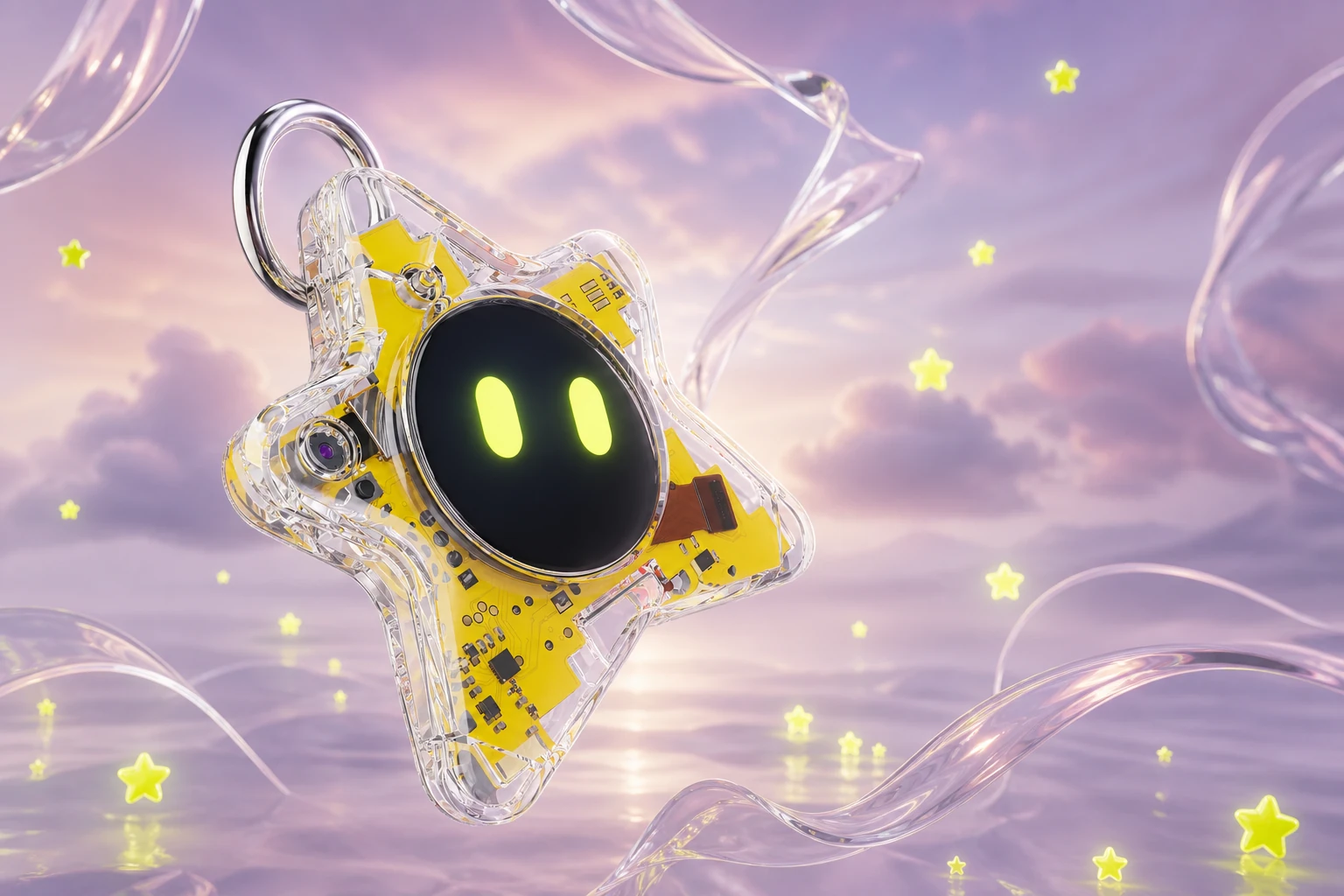
Oneira itself is a $139 expressive pocket companion from JML Tech Studios, an animated face with wandering eyes and moods that shift through the day, with no feed, no subscription, and no app account requirement. The device code is what unlocks private Dreams. Drop 01 is 500 paid units across eight editions, ships US-only no later than December 24, 2026, and carries a 24-hour buyer-remorse cancellation window plus a 90-day limited hardware warranty.
Reserve Oneira in Drop 01
500 units, eight editions, all $139 — live availability counter on the preorder page
And if you just want to see your last dream as a picture in the next sixty seconds, Dream Sketch is free, private, and one tab away.
Frequently asked questions
- Does an AI dream photo generator read my actual dreams?
- No. These tools generate images from the words or photos you give them. The dreamlike style comes from how the model is prompted and tuned, not from any access to your sleep or brain activity.
- Is Dream Sketch really free and private?
- Yes. Dream Sketch runs at oneira.cam/oneira/dream/sketch with no account and no upload — nothing you type leaves your browser. The same dream text always produces the same artwork, and a remix button reseeds it for variations.
- What happens to the original photo in Oneira Dream?
- The original camera frame is not saved. It seeds the generated artwork and is then discarded, and the generated photo itself auto-deletes after 24 hours.
- Do I need a subscription to use Oneira Dream?
- No subscription. Oneira Dream is unlocked with a device code from an Oneira, which costs $139 with no feed, no subscription, and no app account requirement.