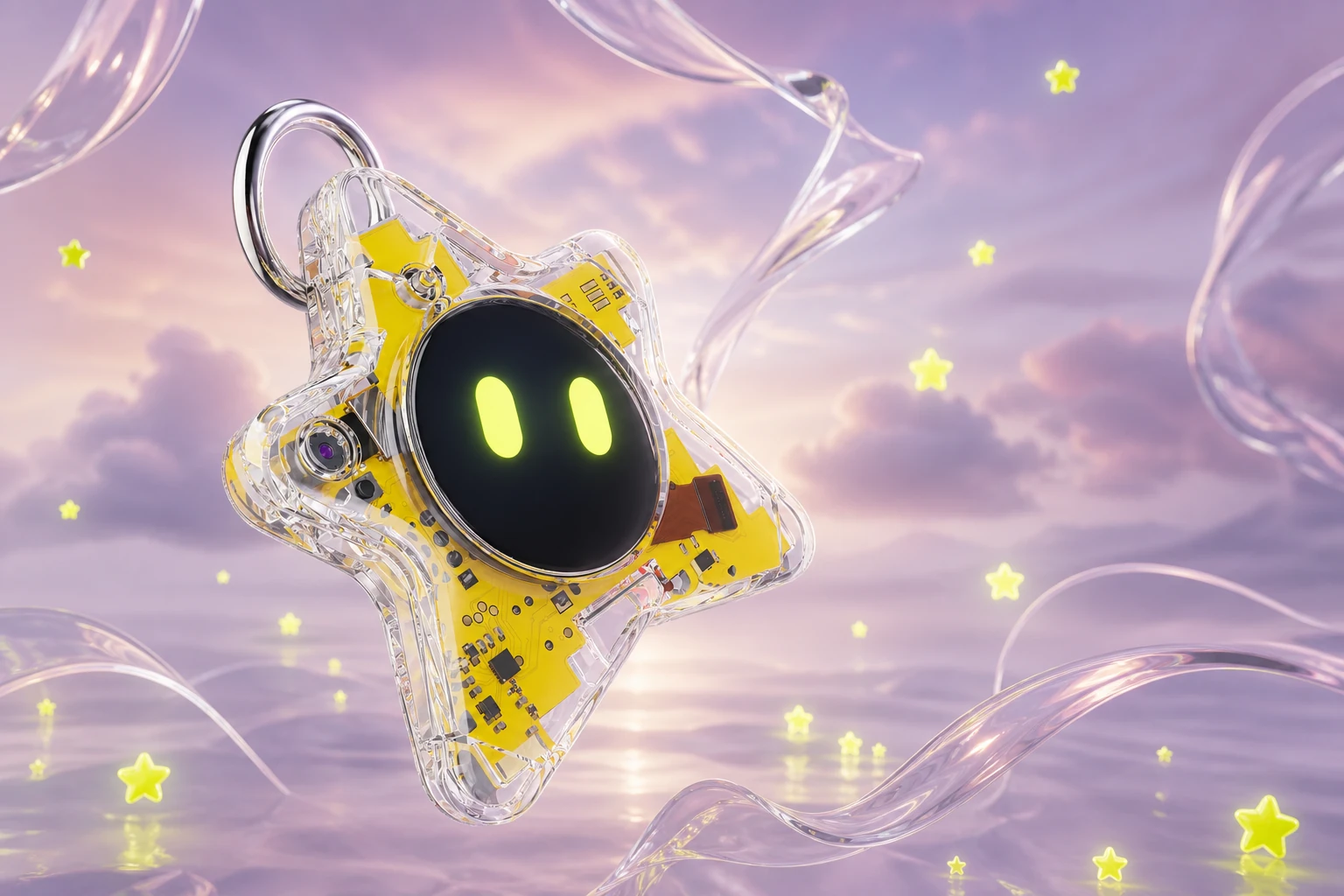
Pocket Companion vs. Smartphone: The Case for a Second Object
Your phone already does everything — that's exactly the problem. Why single-purpose objects earn a place in your pocket, and what a companion device gives you that an app never will.

The obvious argument against a pocket companion device is airtight: your phone already does everything. Camera, music, notes, maps, entertainment — one slab, infinite functions. Carrying a second object seems like carrying a second wallet. And yet people keep doing it: film cameras, dumb music players, paper notebooks, and now companion devices. They're not confused. They've noticed something about what "does everything" actually costs.
Disclosure first: we make Oneira, a pocket companion, so we're arguing our own book here. We'll try to earn your trust by being honest about where the phone genuinely wins.
The problem with a device that does everything
A smartphone is not one tool. It's a portal to every tool, every feed, every person, and every argument on Earth, and each of those is one gesture away from whatever you actually picked it up to do. You take it out to check the weather and resurface eleven minutes later somewhere else entirely. That's not a personal failing — the device is a marketplace, and every app in it is bidding for the next eleven minutes.
This is why "my phone has a better camera" misses the point of a second object. Of course it does. But the phone's camera comes bundled with everything else the phone is, and you can't unbundle it with willpower alone. The camera app sits next to the inbox. The inbox always wins eventually.
What a single-purpose object changes
An object with one job changes the interaction before it starts. There's nothing to check, nothing to clear, nothing waiting. You pick it up, it does its thing, you put it down — and the transaction ends there, because there is no there to scroll to. Three things follow from that:
- Attention stays where you put it. A device with no feed can't redirect you. The eleven-minute detour is structurally impossible.
- Presence gets cheaper. Glancing at a companion object mid-conversation reads — and feels — completely different from glancing at a phone, because everyone knows the phone glance rarely ends at a glance.
- The object gets a personality. Tools that do one thing can afford character. Tools that do everything must stay neutral, because they're a stage for other people's software.
That last point is underrated. Nobody has a relationship with a settings menu. People absolutely have relationships with watches, pens, instruments, and other objects with one job and a point of view. Single-purpose isn't a limitation that companion devices tolerate — it's the raw material their charm is made of.
None of this is new, which is the reassuring part. The past decade has already run this experiment several times: vinyl outsold expectations, film cameras came back from the dead, paper planners survived every productivity app, and distraction-free writing devices found real audiences. Each revival was dismissed as nostalgia at first, and each turned out to be something simpler — people paying money to get one activity back out of the everything-machine. Pocket companions are the same migration, one category later.
Presence is a design decision
Here's the uncomfortable part: most attempts to make phones calmer are settings, and settings are promises we make to ourselves. Grayscale mode, app timers, notification schedules — all reversible in four seconds, all quietly reversed within a month. An object that cannot show you a feed is a different kind of commitment. It's the difference between a diet and a kitchen that simply doesn't contain the snack.
This is where a pocket companion earns its pocket space. It gives your hands something to reach for that isn't a portal. The fidget-reach — that unconscious grab for a device in any idle moment — doesn't disappear when you want it to. But it can be redirected at something that ends the loop instead of starting one.
Where Oneira sits in this argument
Oneira is our attempt to build that different species on purpose. It's a $139 pocket companion with an animated face, wandering eyes, and moods that shift through the day — no feed, no subscription, no app account requirement. It doesn't want your engagement metrics because it doesn't have any. It sits in your pocket being quietly alive, and that's the product.
Even its photography is built to end loops rather than start them. Oneira Dream creates a private AI-generated photo unlocked with a device code — the original camera frame is never saved, and the generated image auto-deletes after 24 hours. There's a community space, Oneira IRL, with monthly challenges and a creator of the week — but it lives on the web, on your terms, not inside a pocket-sized slot machine.
The honest tally
Now the part where we argue against ourselves, because the phone genuinely wins on several fronts and pretending otherwise would insult you:
| Question | Phone | Pocket companion |
|---|---|---|
| Best possible image quality? | Phone, easily | Not the point — and honestly, not close |
| One device to carry? | Phone | This is a second object, full stop |
| Can it interrupt you? | Constantly, by design | Never — nothing to notify |
| Does using it end, or continue? | Continues, by design | Ends — there's nowhere else to go |
| Does it have a personality? | It hosts other people's software | Yes — that's the entire product |
If you read that table and thought "I just want fewer objects," believe yourself — a companion device will end up in a drawer, and no marketing should talk you out of that. But if the left column described a problem you've been trying to solve with settings and self-control, the right column is the structural fix.
Meet Oneira — $139
No feed, no subscription, no account required. Drop 01: 500 units, US shipping.
The smartphone won the war for capability years ago, and it deserved to. The question in 2026 isn't which device does more — it's whether everything you carry should be trying to keep you. One object in your pocket that simply is, rather than wants, turns out to be worth its space.
Frequently asked questions
- Isn't carrying a second device just extra clutter?
- If you're happy with your phone habits, yes — skip it. A pocket companion is for people who've noticed that every phone pickup risks becoming an eleven-minute detour, and who want at least one object in their pocket that structurally can't do that.
- Why not just use focus mode or app timers instead?
- Settings are reversible promises — grayscale, timers, and notification schedules can all be undone in seconds, and usually are. A device with no feed and no notifications isn't a promise; it's a structure. It can't tempt you because there's nothing behind the glass to tempt you with.
- Does Oneira require an app or account?
- No. Oneira has no feed, no subscription, and no app account requirement. Optional web experiences like Oneira Dream and the Oneira IRL community feed live in the browser, on your terms.
- Is a pocket companion's camera as good as a phone camera?
- No, and we won't claim otherwise. Oneira's image-making is deliberately different rather than technically superior: Oneira Dream creates a private AI-generated photo, never saves the original frame, and auto-deletes the result after 24 hours.