The Best Pocket Camera in 2026: An Honest Buyer's Guide
Premium compacts, action cams, film-style compacts, and companion cameras all fit in a pocket, but they solve different problems. Here's how to figure out which one is actually right for you.
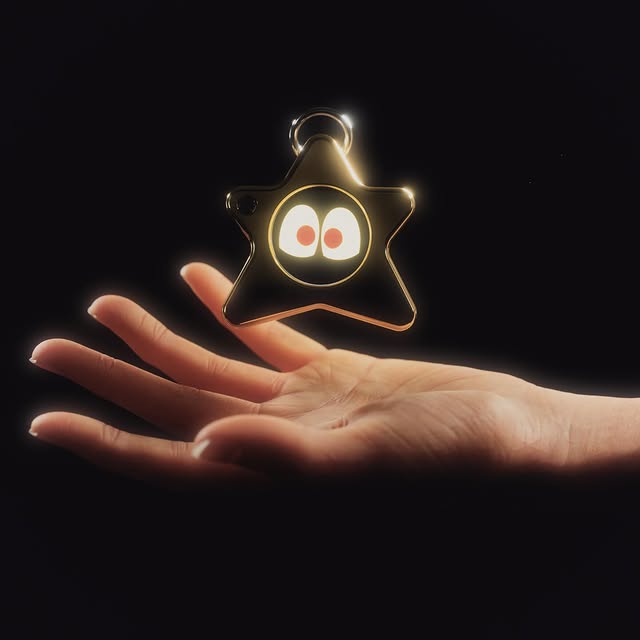
Search for the best pocket camera 2026 and you'll get a wall of spec sheets: sensor sizes, burst rates, codec names. Almost none of it predicts whether you'll actually use the thing. The best pocket camera is the one that's in your pocket on a random Tuesday, the one you reach for without thinking, the one that makes you a little happier to carry. Specs matter, but they matter after that.
Quick disclosure before we go further: we make Oneira, a $139 pocket companion with a camera, so we obviously have a horse in this race. We'll flag exactly where it fits — and where it doesn't — so you can weigh our bias yourself.
What actually matters in a pocket camera
Before comparing categories, decide what you're optimizing for. Most buyer's remorse with small cameras comes from optimizing for image quality alone and discovering, three weeks later, that the camera lives in a drawer. Four criteria do most of the predictive work:
- Carry-ability. Not just size and weight, but whether it survives a jacket pocket, whether you need a case, and whether picking it up feels like a decision or a reflex.
- Joy of use. Does shooting with it feel like play or like operating equipment? A camera you enjoy gets used ten times more than one you merely respect.
- Privacy. Where do your photos go? Some devices push everything to a cloud account by default; others keep things local or delete them entirely. Know before you buy.
- Price relative to your commitment. A $1,000+ compact is a great buy for someone who shoots daily and a guilt object for someone who doesn't. Match the spend to your honest habits.
Notice that megapixels didn't make the list. In 2026, essentially every camera you can buy produces images good enough for screens and normal-sized prints. The differences that change your life are behavioral, not optical.
The four kinds of pocket camera
Nearly everything sold as a pocket camera today falls into one of four categories. Each solves a different problem, and the fastest way to a bad purchase is buying from the wrong column.
| Category | Best for | The honest trade-off |
|---|---|---|
| Premium compacts | Image quality obsessives who want one serious everyday camera | Highest prices in the pocket class; can feel precious to carry |
| Action cams | Sports, travel, water, kids, chaos | Built for video first; less charming for quiet everyday stills |
| Film-style compacts | People who want the look and ritual of film or instant photos | Per-shot costs or deliberate limits; slower by design |
| Companion cameras | People who want a playful object that happens to take photos | Not a spec machine; the point is character, not resolution |
Premium compacts
The classic enthusiast lines — the fixed-lens compacts that photographers have loved for years — remain the image-quality kings of the pocket world. If you already know you'll shoot most days, and you want files you can print big or grade seriously, this is your category. The catch is cost and mindset: these are instruments, and some people find that an instrument in the pocket creates a low-grade pressure to perform photography rather than just enjoy it.
Action cams
Rugged, waterproof, stabilized, and basically indestructible, action cameras are the right answer if your life involves water, dirt, speed, or small children. They're superb at video and unfussy about abuse. They're less lovable for slow, quiet stills — the ergonomics and interfaces are built around mounting and recording, not lingering over a frame.
Film-style compacts
Instant cameras and film-look compacts sell a feeling: scarcity, ritual, a physical or deliberately imperfect result. That constraint is the feature. If you want photography to feel like an occasion again, this category delivers. Just budget honestly for consumables where they apply, and accept that convenience is exactly what you're giving up.
Companion cameras
The newest category, and the one we play in. Companion devices are small objects with personality — a face, moods, a presence — that also capture images. You carry one for the same reason you'd carry a good pen or wear a mechanical watch: the object itself is pleasant to live with, and the camera is part of the relationship rather than the whole point.
Where Oneira fits
Oneira is our entry in that last category: a $139 pocket companion from JML Tech Studios with an animated face, wandering eyes, and moods that shift through the day. There's no feed, no subscription, and no app account requirement. Its photo trick is deliberately strange: with Oneira Dream, a device code unlocks a private AI-created photo — the original camera frame is never saved, and the generated image auto-deletes after 24 hours. It's photography as a passing moment rather than an archive.
It ships in eight editions — Snow, Lilac, Azure, Midnight, Aluminum, Crystal, Stainless, and Brass — all at the same $139. Drop 01 is limited to 500 paid units shared across all editions, with a live availability counter on the preorder page. Shipping is US-only for now.
How to decide
One more thing before the decision framework: these categories aren't mutually exclusive, and plenty of people end up owning two. A premium compact for trips plus something cheap and playful for the daily pocket is a common — and sensible — pairing, because the two purchases are solving different problems. What rarely works is buying one expensive camera and expecting it to be both the serious tool and the casual companion. Skip the spec comparison spreadsheets and answer three questions instead:
- What killed your last camera habit? If the answer is "too bulky" or "felt like homework," don't buy a bigger, more serious version of the same thing.
- Where should your photos live? Cloud library, physical print, private and temporary — each category has a very different default answer.
- What would you actually carry for 30 straight days? Whatever you just pictured is your category. Buy the best thing inside it, not the most impressive thing outside it.
See Oneira — $139, Drop 01
500 units across eight editions, live availability counter, US shipping
The honest summary: there is no single best pocket camera in 2026, only a best category for the way you actually live. Premium compacts for image quality, action cams for chaos, film-style compacts for ritual, companion cameras for joy. Pick the column first. The rest is details.
Frequently asked questions
- Are pocket cameras still worth buying in 2026 when phones are so good?
- Yes, but not for image quality alone — modern phones are excellent. A dedicated pocket camera earns its place through focus (one job, no notifications), a different shooting ritual, or a character your phone doesn't have. If none of those appeal to you, your phone is genuinely fine.
- What's the difference between a companion camera and a regular compact?
- A regular compact is an imaging instrument; a companion camera is a character that happens to capture images. Devices like Oneira lead with personality — an animated face, moods, an expressive presence — and treat photos as part of the relationship rather than the entire product.
- How much should I spend on a pocket camera?
- Match the spend to your honest habits, not your aspirations. Daily shooters can justify premium compact prices; occasional or playful shooters are usually happier in the $100–$300 range, where the object can be fun without becoming a guilt-inducing investment.
- Does Oneira save the photos it takes?
- No. With Oneira Dream, the original camera frame is not saved at all, and the private AI-created photo it generates auto-deletes after 24 hours. It's built for people who want image-making without accumulating an archive.